
Azur Promilia Kibo Guide: Starlink & Collection
Kibo are the native creatures of Promilia and the reason Azur Promilia is not simply an open-world action RPG with a collectible attached. They are found in the field, bonded through a system called Starlink, and then used in three places at once: combat, exploration and the player's home base. More than 20 million pre-registrations were logged before the Asian launch on November 26, 2026, and most of what those players will do in the first week runs through Kibo rather than through the human roster.
Azur Promilia PC is a game where split-second decisions and quick reactions can make all the difference. However, playing on a mobile device means relying heavily on touchscreen controls, which can make precise movements difficult. During intense battles or repetitive farming sessions, this can also lead to fatigue and increase the chances of making mistakes.
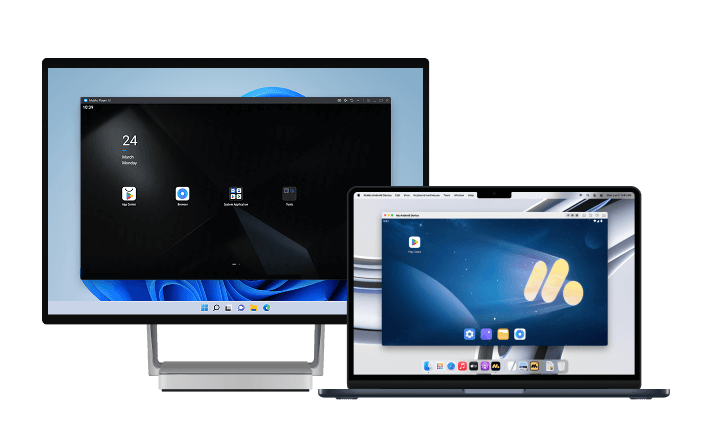
If you're looking for a more comfortable way to play, MuMuPlayer is a great option for PC and Mac. As an Android emulator optimized for running mobile games on desktop, MuMuPlayer offers intuitive keyboard and mouse controls alongside stable performance. With MuMuPlayer, you can control Azur Promilia PC with the same precision and responsiveness you'd expect from a PC game.
Download MuMuPlayer using the button below and enjoy Azur Promilia PC with greater comfort and control.
What Kibo Are and Why They Matter
The framing matters because it predicts how the game plays. Kibo are not summoned units; they are inhabitants of the world that the player, as a Starbounder, encounters and bonds with.
- Field-native: Kibo are found across Promilia's regions, which makes exploration a collection activity rather than a backdrop for combat.
- Personality and form variety: they differ in shape and temperament, and the bond is presented as a relationship rather than an unlock.
- Triple role: combat partner, exploration aid, and household helper. The same creature follows the player into a fight and assists with gathering or base work.
- Bond gate: a creature becomes usable as a partner through Starlink, so encountering a Kibo and owning one are separate states.
Practically, this changes the collection goal. A player who encounters twenty creatures and bonds with three has less usable power than one who bonded with eight, because the unbonded ones contribute nothing.
Starlink: The Bond Mechanic
Starlink is the system that converts an encounter into a partner, and it functions as the spine of progression.
- Per-creature bond: Starlink is formed with an individual Kibo, not with a species. Two creatures of the same type are not interchangeable partners.
- Build layer: character and Kibo development involves an element chart, Sigils, Overlimit, Arts and Starlink together. Starlink is the connective tissue rather than a standalone stat.
- Combat identity: a bonded Kibo brings its own abilities into the fight instead of acting as a generic buff.
- Depth over breadth: because bond progress is invested per creature, developing a small set outperforms collecting widely.
The strategic question Starlink creates is allocation. Since investment is per Kibo, the roster decision is not "how many can I collect" but "how many can I afford to develop", and the answer early on is a small number.
Team Structure in Combat
Beta reporting describes a party that mixes human companions and Kibo rather than fielding one type alone.
- Human side: up to three characters, chosen from the cast rather than a single protagonist, which means team building includes character traits and roles.
- Kibo side: up to three bonded creatures, with their own specific skills.
- Interaction layer: combination attacks that pair character and creature output, plus a counter system that rewards reading enemy telegraphs.
- Adjustable loadout: because both halves are selectable, a run's composition is a genuine build decision rather than a fixed party with a cosmetic pet.
That split has a practical implication: the human trio carries the damage rotation, while the Kibo trio supplies coverage, utility or burst depending on what the encounter demands. Treating the creature slots as utility rather than as a second damage line is usually the more reliable default.
Kibo Outside Combat
The second half of the system is what the creatures do when no one is fighting.
- Exploration: Kibo assist in traversal and discovery, which is how the collection loop feeds itself.
- Home base: they participate in daily life at the player's base rather than waiting in storage.
- Production: farming, gathering and crafting benefit from creature help, which turns the home base into an extension of the collection system.
- Hatching and care: raising creatures at home is a separate track from bonding in the field, and it extends the loop beyond a single encounter.
For players deciding what to prioritize in week one, the home base is the cheaper investment: it produces materials that fund both character and creature development, and the creatures assigned there do not need combat-grade investment to be useful.
Kibo-Specific Modes
Beta coverage also describes a mode built around the creatures themselves rather than around the human cast.
- Kibo Duel: teams of Kibo are fielded in tactical stages with real-time deployment and command inputs, which tests creature composition without character backups.
- Why it exists: it isolates the creature side of the build, so a player whose characters carry every fight will find out quickly whether their Kibo line actually holds up.
- Caveat: mode availability and rules are beta-level information and may change for launch.
If Kibo Duel ships in its reported form, it makes creature investment more valuable than the combat numbers alone suggest, because it introduces content where characters cannot compensate.
How to Approach Collection Early
Four priorities hold up for the first weeks of play.
- Bond a small working set first: three to five Kibo that cover damage, utility and one support role is enough to run the base game loop.
- Match the element chart before adding numbers: because the build layer runs through an element chart and Sigils, a coherent small team beats a larger mismatched one.
- Keep a home-base crew: creatures assigned to production do not need combat investment, so a separate group pays for itself.
- Delay deep investment until the roster is known: resource spending on a creature that gets replaced by a superior one later is the most common early loss.
Data Status
Party structure, Kibo Duel and the named progression systems come from beta reporting and pre-launch coverage rather than from a published launch specification. Manjuu has not detailed exact bond values, and mode rules may change for the November 26 release in Asia. Treat the structure as reliable and the numbers as open.
How to Play Azur Promilia on PC or Mac with MuMuPlayer
1. Download and install MuMuPlayer for PC or Mac.
2. Launch MuMuPlayer and search for Azur Promilia PC in MuMu Store.
3. Click Azur Promilia PC in the search results to download and install it. If you can't find Azur Promilia PC in MuMu Store, you can also download the game's APK file and install it locally in MuMuPlayer.
4. Click the Azur Promilia PC icon on the home screen to launch the game.
With just a few minutes of setup, you can start enjoying Azur Promilia on your PC or Mac. Take your gaming experience to the next level with MuMuPlayer's intuitive controls, high-quality graphics, stable performance, and more. Real-time combat with a six-slot party benefits directly from mapped keys and a readable screen, and creature management is easier when the roster, elements and bond levels sit in one view.
Final Thoughts
Kibo are the center of Azur Promilia, not a side system: they are collected in the field, bonded through Starlink, fielded in three slots beside three characters, and put to work at the home base. The optimal approach early is narrow rather than broad: a few deeply developed bonds, one coherent element setup, and a separate crew running production.
Because the combat is real-time and the management layer is dense, the interface decides how much of the system is actually legible. Running the mobile client through MuMuPlayer on a Windows PC or an Apple Silicon Mac gives the party screen, creature list and controls enough room to work with, in whichever region the game is already live.
End of Article