
Card of Demon Slayer Beginner Guide: Deck Synergy
Card of Demon Slayer is a deckbuilding roguelike that hides real tactical depth under a cute SD art style. You draw from hundreds of cards, walk branching dungeon paths, and trigger ultimate skills by combining cards in the right order. One run takes minutes; understanding why a run worked takes a bit longer.
Card of Demon Slayer: Deck RPG PC is a game where every card pick and every turn matters, and misjudging a combination can end a run outright. However, playing on a mobile device means reading small card text and tracking several enemy states on a cramped touchscreen, which makes careful decisions harder.
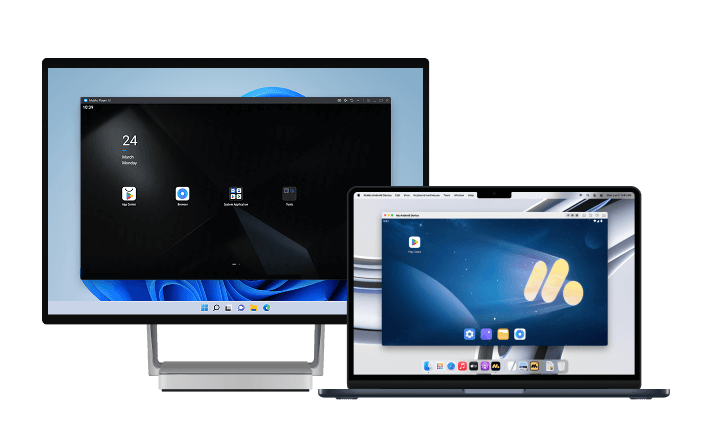
If you're looking for a more comfortable way to play, MuMuPlayer is a great option for PC and Mac. As an Android emulator optimized for running mobile games on desktop, MuMuPlayer offers intuitive keyboard and mouse controls alongside stable performance. With MuMuPlayer, you can control Card of Demon Slayer: Deck RPG PC with the precision a turn-based card game deserves.
Download MuMuPlayer using the button below and enjoy Card of Demon Slayer: Deck RPG PC with greater comfort and control.
Start With a Recommended Deck
The tutorial offers recommended decks, and using them for your first two or three runs is not laziness, it is calibration.
- You learn the tempo : how many cards a turn realistically supports, and how much setup an ultimate needs.
- You see the card pool : recommended decks expose card types you would not have picked on instinct.
- You avoid early dead ends : a self-built deck without context usually stalls on the first real boss.
- Switch when you can explain the change : the right moment to build your own deck is when you can say what the recommended deck lacks in a specific situation.
How Ultimate Skills Actually Trigger
Ultimates are not a button you press when the meter fills. They are the result of combining cards correctly, which changes how you should sequence turns.
- Synergy first : cards that set up a combination are worth more than cards with higher individual numbers.
- Plan several turns ahead : the ultimate is the payoff for a plan, so building it mid-fight is already too late.
- Keep a consistent core : a deck that reliably assembles one combination beats a deck stuffed with near-misses.
- Count your pieces : if a combination needs three specific cards, the deck has to make those three likely rather than lucky.
This is the difference between winning and losing most runs. Players who draft for raw damage collect strong singles; players who draft for synergy finish fights with an ultimate in hand.
Reading the Dungeon Map
Every fork offers a risk-reward choice: treasure, danger, or a tougher encounter for greater rewards.
- Early forks: take safe routes : a fresh deck has no redundancy. Preserve it until the combo is online.
- Middle forks: chase cards : this is where your deck gains its second engine, and where the risk is worth taking.
- Late forks: take treasure : the boss decides the run, not the encounter before it.
- Skip an obviously bad fight : a hard encounter that drops nothing your deck wants costs health for no return.
Branching routes are why roguelike runs feel different even with the same starting deck. Route discipline is a skill you can learn faster than card evaluation.
Companions: What to Look For
You lead a fox hero and recruit SD animal companions, each with unique abilities. The mistake is collecting the cutest option rather than the one that completes your plan.
- Match the companion to your combination : some abilities unlock turn-based tactics that are impossible alone.
- One enabler beats three additions : a companion that makes your key card reliable is worth more than three that add damage.
- Change companions when the route changes : a defensive companion suits the early dungeon; a damage companion suits the boss.
When to Stop Using Auto Play
Auto play handles repeated fights, and it is genuinely useful for trash encounters. It is also the fastest way to lose a boss fight.
- Manual for bosses : ultimate timing is the entire fight. Auto play does not plan several turns ahead.
- Manual when health is low : the correct play is defensive, and auto play optimizes for damage.
- Auto in familiar content : if you have cleared the encounter consistently, let it run and save your attention.
The practical habit is to watch the first turn of any fight. If it looks routine, hand it to auto. If the enemy spread looks dangerous, take control before it costs the run.
A Short Session That Still Progresses
- One full run, not five partial ones : the roguelike structure rewards finishing, because bosses drop the meaningful rewards.
- Test one idea per run : changing two variables means you learn nothing about either.
- Play vertically when you are commuting, horizontally when you are planning : the one-handed layout exists for a reason.
- Review the loss : a failed run that ends to a predictable cause is progress, not wasted time.
Reading a Boss Fight Before You Commit
Bosses are the one place where the deck you built meets the plan you had. Three checks before you take control.
- Can you assemble the ultimate? : count the pieces. If two of three are missing from hand, the fight becomes about surviving rather than finishing.
- Is your health above half? : below that, defensive plays matter more than combination progress.
- Which companion is active? : a defensive companion buys the setup turns a fragile deck needs.
If the answer to the first check is no, the run is not lost, it is just a longer fight. Play safe, take the small wins, and treat the boss as practice for the next attempt rather than a wall to break through.
Deck Size and Card Discipline
Every card you add dilutes the chance of drawing what you need. The temptation in a card roguelike is to take everything; the discipline is to take almost nothing.
- Add only cards that serve the combination : a strong card outside your plan still costs a draw.
- Keep the deck lean enough to cycle : if you are not seeing your core pieces twice per fight, the deck is too big.
- Prefer upgrades over additions : improving a card you already rely on is usually stronger than adding a new one.
- Review before each boss : three weak cards removed are worth more than one strong card added.
The same principle applies to the branching route: every optional fight is a card decision, and the deck that wins is the one that reliably assembles its own plan rather than the one holding the most options.
Play Card of Demon Slayer: Deck RPG on PC with MuMuPlayer
For an enhanced gaming experience, we recommend playing Card of Demon Slayer: Deck RPG PC with MuMuPlayer. If you're looking for a more stable and convenient way to read cards and plan turns, playing on your PC or Mac with MuMuPlayer is a great option.
Compared with playing on a mobile device, MuMuPlayer gives you a larger screen and a more stable environment, making card text, enemy states, and battlefield layout far easier to read at a glance. On PC, you can enjoy higher and more consistent frame rates and a more comfortable experience during long sessions. Keyboard and mouse controls also make card selection faster, which matters when you are sequencing a combo.
MuMuPlayer fully supports both Windows and macOS, delivering stable, optimized performance across supported devices.
Final Thoughts
Card of Demon Slayer rewards decks that assemble something rather than decks that stack numbers. Learn the tempo on a recommended deck, draft for a combination you can count, take safe forks early and card forks in the middle, and take control by hand the moment a boss appears. Auto play is a tool for content you already understand. Reading card text and enemy states quickly is the real edge in a turn-based game, and that is what a larger screen buys you.
End of Article