
Petit Planet Luca Arbor Guide: 40 Levels & Unlocks
Petit Planet does not gate progress behind a story boss or a level requirement on a map. It gates everything behind one structure: the Luca Arbor, the tree at the center of the player's planet that runs to 40 levels and controls what the planet can support. Farming plots, neighbor capacity, terraforming tools, housing tiers and advanced crafting materials are all attached to Arbor milestones rather than to a separate account level. Understanding that single dependency explains most of the game's pacing.
Petit Planet stands out for its polished visual style, well-designed UI, and attention to detail, delivering an immersive gaming experience. However, enjoying all these visual details on a small mobile screen can leave you wanting more.
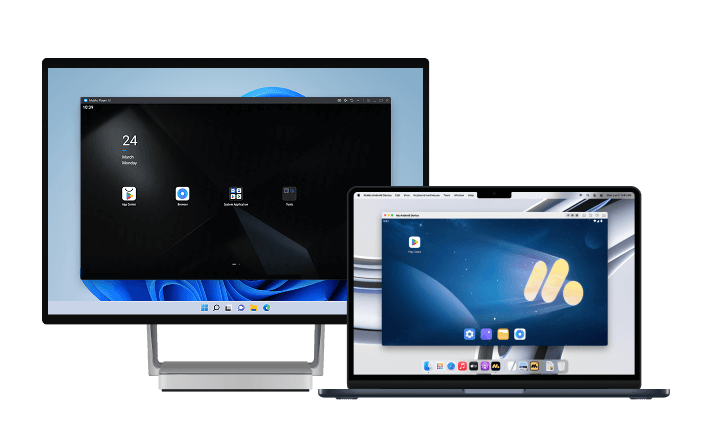
For a more vivid and immersive experience, we recommend playing Petit Planet on PC or Mac with MuMuPlayer. Enjoy sharper, high-quality graphics and appreciate every detail of the game's UI on a larger screen. With a wider view, you can fully experience the visual appeal of the game. MuMuPlayer also supports high frame rates and high-resolution graphics on both Windows PCs and Apple Silicon M-series Macs, delivering smoother and more enjoyable gameplay.
Download MuMuPlayer using the button below and experience Petit Planet PC in high quality on a larger screen!
What the Luca Arbor Actually Controls
The Arbor is a level track, not a cosmetic tree. Its level is read by other systems as a permission check.
- 40 levels total: an expansion from the 10-level track used in earlier beta phases, which indicates the launch build expects a considerably longer progression arc.
- Landscape shaping: growing the Arbor is described as reshaping the planet's surface, so visual development of the planet is tied to the same number as functional unlocks.
- Feature gating: new building slots, tool upgrades, housing tiers and higher-tier crafting are all attached to Arbor milestones rather than purchased directly.
- Neighbor capacity: the number of residents a planet can host rises with Arbor progress, which makes it a social unlock as well as a mechanical one.
Because of that gating, the Arbor is the correct answer to almost every early "what should I do next" question. A player who maxes furniture purchases before Arbor milestones ends up holding items they cannot place.
Where Luca Comes From
Leveling the Arbor requires Luca, the game's planetary experience, plus a secondary material tracked as Lucasprout. Luca is not a single-activity currency.
- Passive and active accumulation: Luca accrues from ordinary play rather than from a dedicated grind. Every activity that produces something tends to feed it.
- Primary sources: crafting, farming, fishing, cooking and general resource gathering.
- Neighbor Bond levels: raising a resident's bond level also contributes, which links the Arbor to the relationship system instead of leaving the two as parallel tracks.
- Lucasprout: a companion material used in the same progression, so planning an Arbor push means planning both resources rather than one.
The practical implication is that a diversified daily routine outperforms any single-activity session. Ten minutes spread across crops, cooking, gathering and one neighbor interaction generates more Luca than ten minutes of fishing alone.
Milestones and What Unlocks
Published beta data gives concrete unlock points, which makes early planning possible.
- Level 2: basic farming unlocks. This is the first real economic unlock, because crops are the backbone of the Dough economy.
- Level 3: four initial farm plots are added, establishing the first production loop.
- Mid to high levels: additional farm plots, higher neighbor capacity, Luca Fruit customization options, dynamic weather, and access to meteorite ore.
- Meteorite ore: a daily-resetting resource used in advanced crafting, which means Arbor progress converts directly into a renewable high-tier material supply.
Two of those unlocks deserve emphasis. Neighbor capacity raises the ceiling on bond automation, so Arbor level indirectly determines how much passive labor the planet can run. Dynamic weather is the point where the game stops being a static diorama, since it changes what the planet looks like on a given day rather than only what it contains.
House Expansion: Costs and Gates
Housing is the most expensive system in the game, and it is gated twice: once by Arbor milestones and once by neighbor bonds.
- Primary currency: house expansions and furniture purchases are paid in Dough, the everyday currency.
- Observed cost spread: early minor upgrades sit around 1,200 Dough, while max-tier five-star housing upgrades reached 150,000 Dough in the final beta. That is a two-order-of-magnitude difference, so expansion pacing is inherently long-term.
- Gate one, Arbor milestones: higher housing tiers, terraforming tools and advanced furniture sets unlock through Arbor levels rather than through currency alone.
- Gate two, bond automation: some house expansion blueprints are tied to neighbor bonds, which is why the housing and relationship systems cannot be advanced separately.
A secondary currency, Loomi, appears in the broader economy for specific neighbor interactions and automation. Treat Dough as the construction budget and Loomi as the relationship and automation budget rather than interchangeable savings.
Home Rating and How It Is Evaluated
Decorating is scored, and the scoring criteria are more mechanical than they appear.
- Volume: the quantity of furniture placed in a space contributes, so an empty large room scores worse than a furnished small one.
- Rarity: rare decorations, collectibles and event-specific items raise the rating beyond what volume alone reaches.
- Aesthetics: matching color schemes and coherent thematic sets, such as cosmic, floral or desert themes, are evaluated on top of the objects themselves.
The takeaway for early players is that a consistent theme placed densely outperforms scattered rare items. Rarity is a multiplier on a coherent set, not a substitute for one.
Events That Feed the Arbor
Planet Growth Rewards events attach additional payouts to Arbor leveling, and the published example is significant: leveling the Arbor during the event can gift a total of 10 Sea Whistles, the currency used for seasonal Curio pulls.
- Timing matters: holding a completed level-up until an event window opens converts the same Luca into event rewards as well.
- Seasonal pulls: Sea Whistles feed Curio pulls, so Arbor progress during events also strengthens the collection layer.
- Stacking: because the Arbor's other unlocks arrive on the same milestones, an event-timed push compounds: new plots, new weather, and event currency at once.
Data Status
The level cap, milestone contents and cost figures above derive from the final beta and community documentation of it. HoYoverse has not published a full launch spec, and costs of this kind are commonly tuned before release. Treat the structure as reliable and the exact numbers as provisional.
Play Petit Planet on PC or Mac with MuMuPlayer
Here are some of the key benefits you'll experience when playing Petit Planet PC on Windows or macOS with MuMuPlayer.
1. Stable Performance
Enjoy consistent frame rates and optimized performance for smooth, reliable gameplay, even during extended sessions and demanding battles.
2. Customizable Controls
MuMuPlayer converts touchscreen inputs into keyboard and mouse controls, making precise aiming, quick camera movements, and other detailed actions easier to perform. You can also freely customize your keyboard and mouse mappings to create a control setup that suits your Petit Planet PC playstyle.
3. Multi-Instance Support
Run multiple instances simultaneously to manage different accounts or work through repetitive content more efficiently.
4. High-Fidelity Graphics and Smooth Gameplay
Mobile devices can experience performance drops due to overheating, while MuMuPlayer takes advantage of your PC's hardware to deliver a stable, high-FPS gaming experience. Enjoy smooth gameplay at up to 120 FPS, or even 240 FPS depending on your setup. For games that demand quick reactions, higher frame rates can make a noticeable difference in responsiveness and help you stay focused during battles.
MuMuPlayer is fully compatible with both Windows and macOS, delivering optimized performance across supported devices.
Final Thoughts
The Luca Arbor is Petit Planet's master switch. Luca flows from routine activity and neighbor bonds, milestones hand out plots, weather, housing tiers and meteorite ore, and almost every other system waits behind one of those gates. Pushing the Arbor early costs nothing in opportunity, because everything else is downstream of it.
Because the work is placement and planning rather than reaction, the interface carries the pace. Running the mobile client through MuMuPlayer on a Windows PC or an Apple Silicon Mac gives the planet enough screen to compare plots and layouts at once, which is exactly the kind of task a phone makes slower than it needs to be.
End of Article